
Registered Office for an AE Company in Greece: The Complete 2026 Guide

If you are forming an Anonymi Etairia (AE) — the Greek equivalent of a societe anonyme / public limited company — one requirement sits quietly underneath every other formality: a legal registered office for an AE company in Greece. Before you get lost in share capital tables, GEMI filings and articles of association, it helps to separate the two questions clearly: forming the AE is one process, and giving it a lawful registered seat is another. This guide focuses on the second one, because that is the piece most founders underestimate.
Why an AE Company Needs a Registered Office
Every Anonimi Etairia registered in Greece must declare a registered office (edra) at incorporation. This address is filed with GEMI (the General Commercial Registry), used by the tax office (DOY) to assign the company’s tax identity, and printed on invoices, contracts and the company’s statutes. Without a valid, defensible address, the incorporation file simply cannot move forward — and an address that cannot survive scrutiny later becomes a liability.
For company formation itself — drafting the articles of association, calculating minimum share capital, appointing the board — you should consult your accountant or corporate lawyer. What we cover here is the one piece of the puzzle that is our actual business: the registered office for an AE company in Greece.
A Registered Office Is Not the Same as Forming the AE
It’s easy to conflate “setting up a company” with “renting an office.” They are separate steps. You can complete every legal formality of an AE — share capital, board resolutions, GEMI registration — while your registered office is a real, compliant address that costs a fraction of a commercial lease.
What a Registered Office Without a Full Office Actually Means
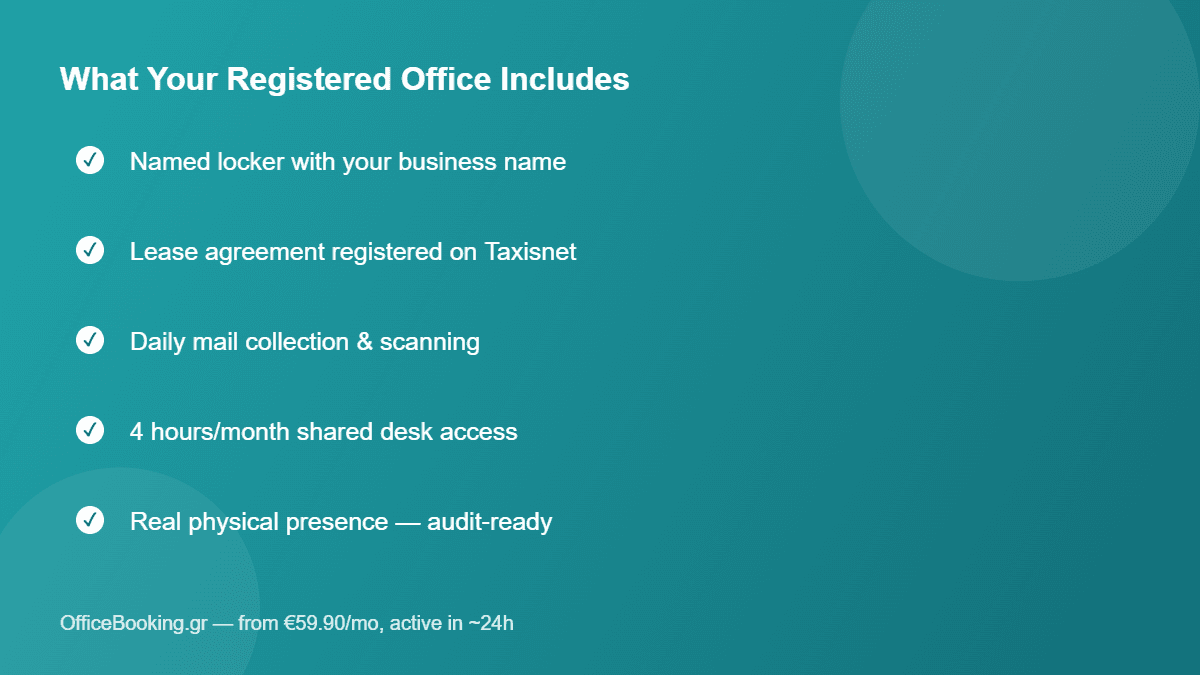
A registered office for an AE company in Greece does not require a private suite with a receptionist. What it requires is a genuine, physical, inspectable location tied to your company’s name, where mail arrives and where a tax inspector could, in principle, show up. That’s the bar. Below is what that looks like in practice.
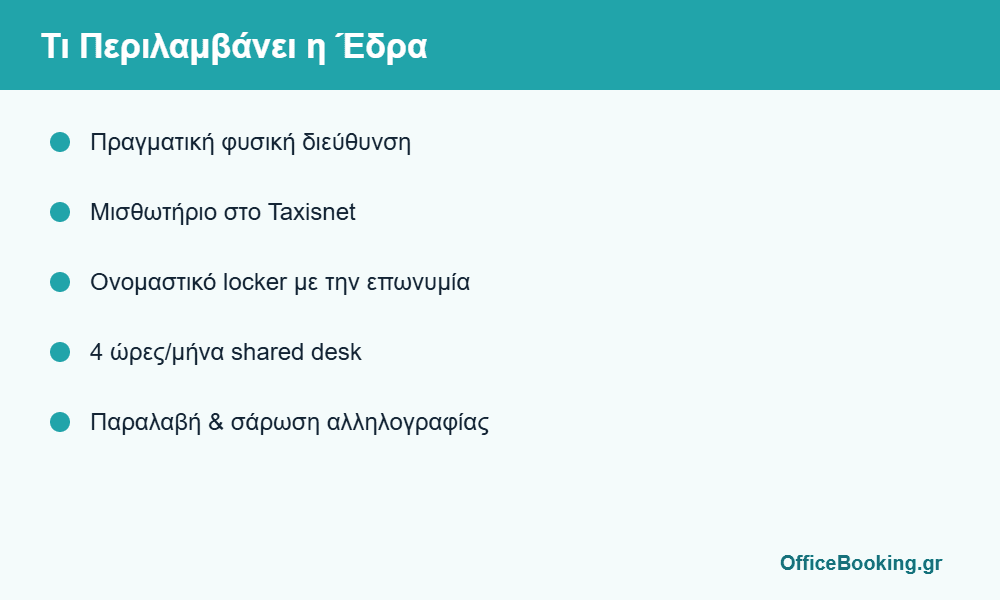
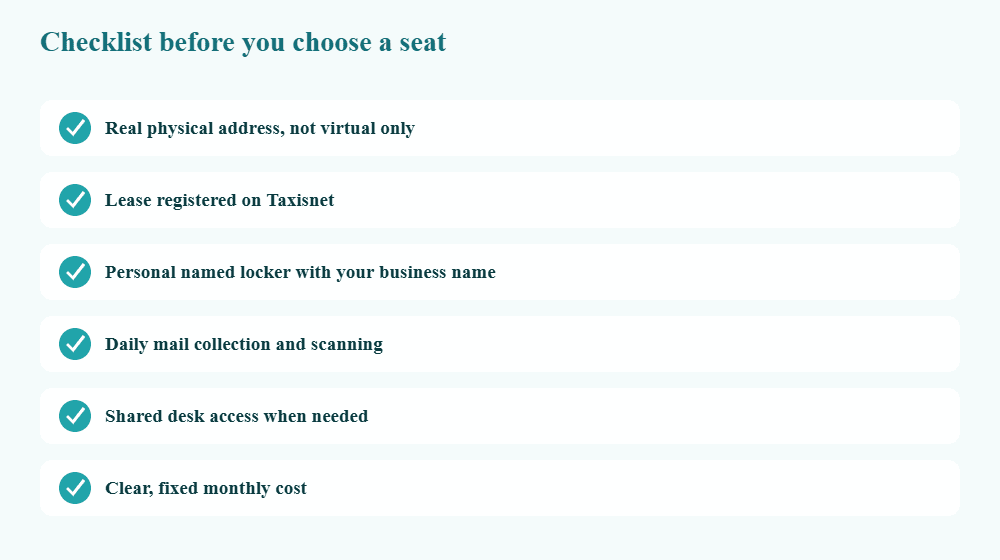
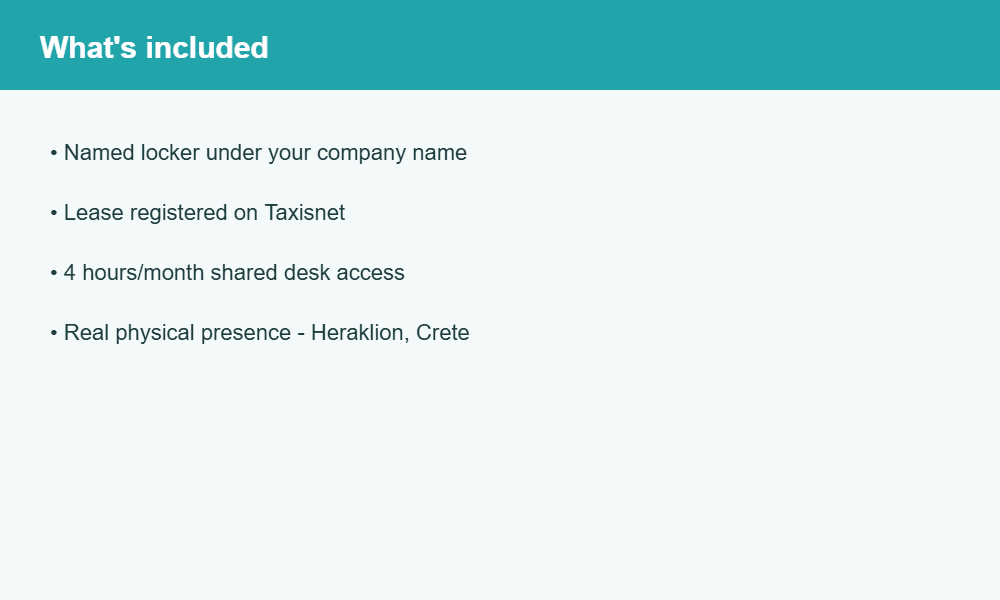
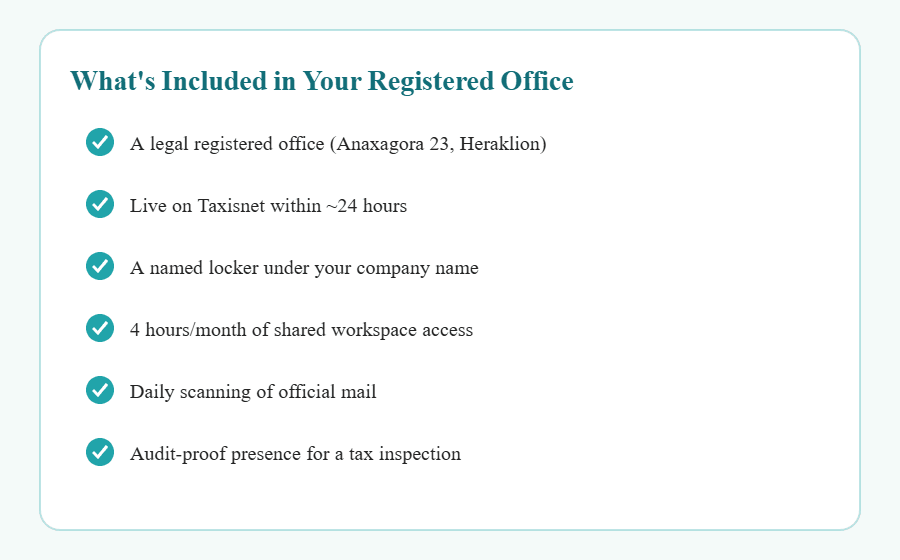
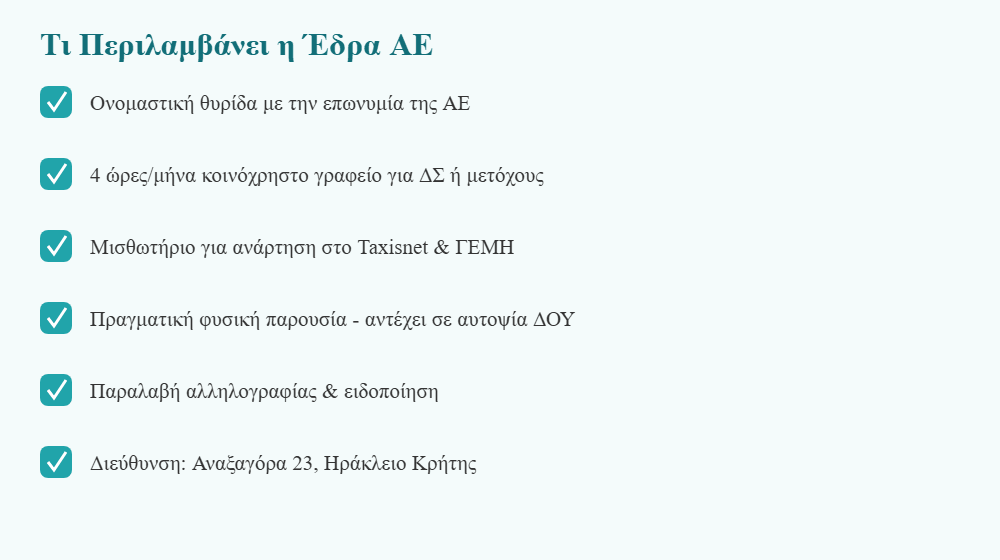
Real Physical Presence at Anaxagora 23, Heraklion, Crete
OfficeBooking.gr’s registered office sits at a real street address — Anaxagora 23, Heraklion, Crete — not a mailbox-only PO box service and not a “virtual address” with no physical footprint. That distinction matters the moment a DOY audit (autopsy) is triggered.
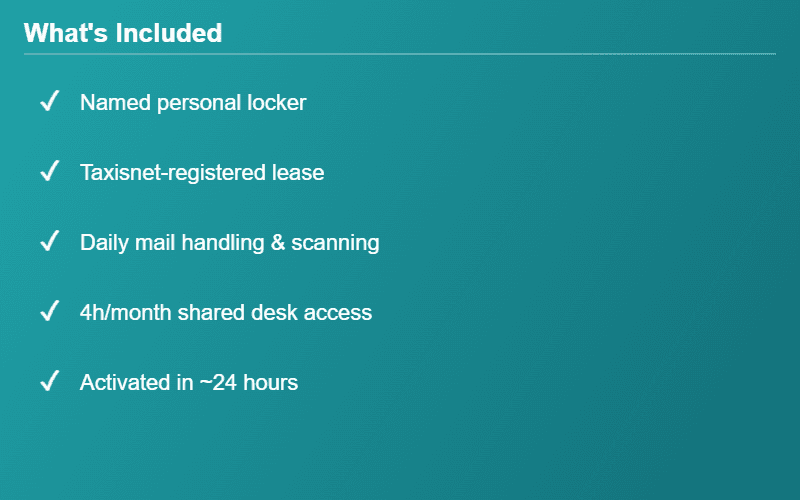
A Lease Registered on Taxisnet
Your company receives a proper lease agreement, uploaded to Taxisnet exactly as a traditional office lease would be, satisfying the documentation the tax authority expects to see on file.
A Personal, Named Locker With the AE’s Company Name
Each client gets an individually labelled locker bearing the company’s legal name — a small detail that nonetheless signals a real, distinguishable presence rather than a shared drop-box.
Daily Mail Receipt and Scanning
Correspondence addressed to your registered office is received and logged daily, so nothing sent by GEMI, the tax office, or a supplier disappears into a black hole.
4 Hours a Month of Shared Desk Access
Should a board member or shareholder need to be physically present — to sign something in person, meet a supplier, or simply work from Crete for an afternoon — the plan includes four hours per month of shared desk access on-site.
How Much Does a Registered Office for an AE Company in Greece Cost
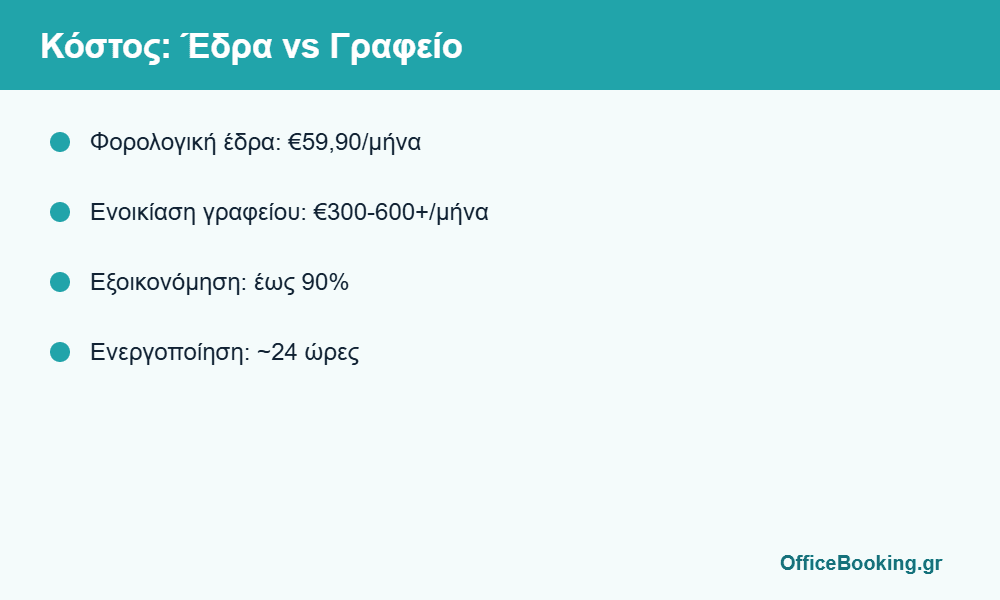
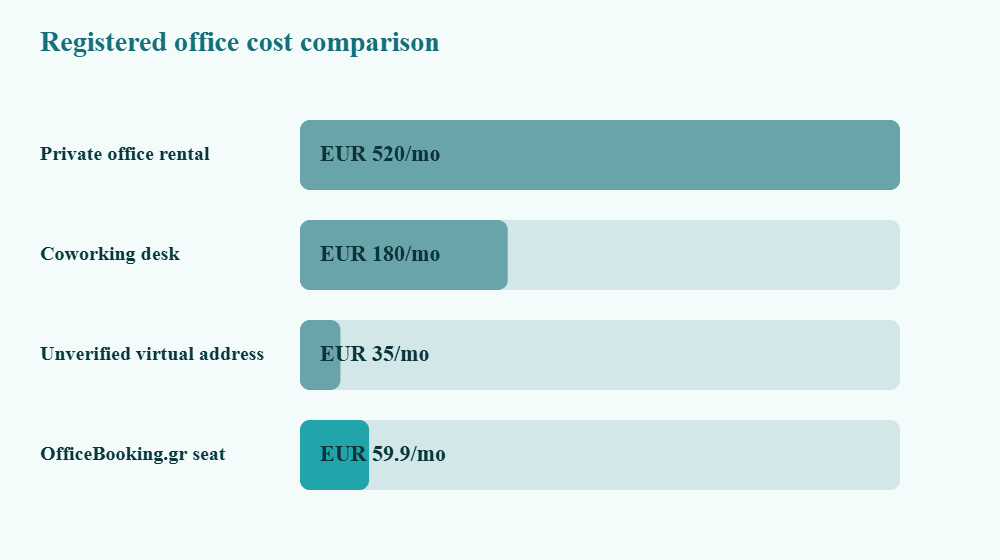
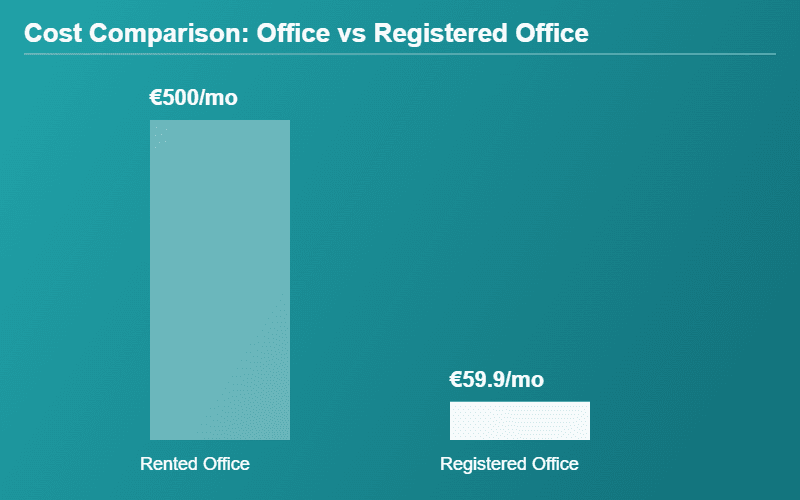
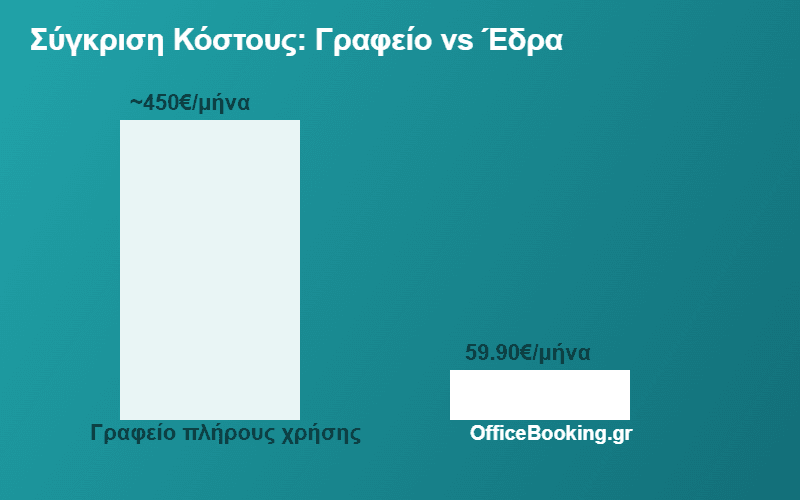
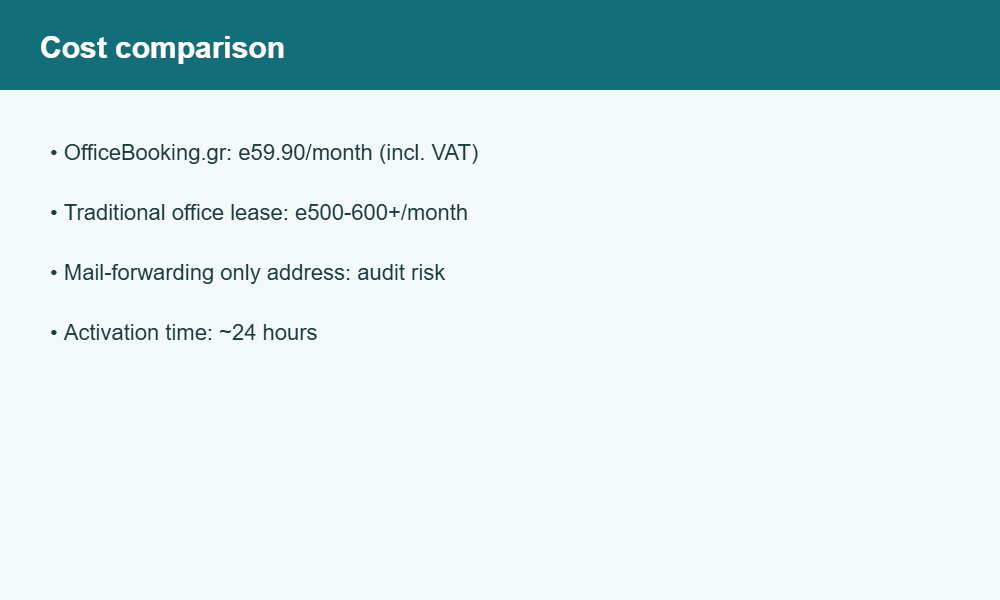
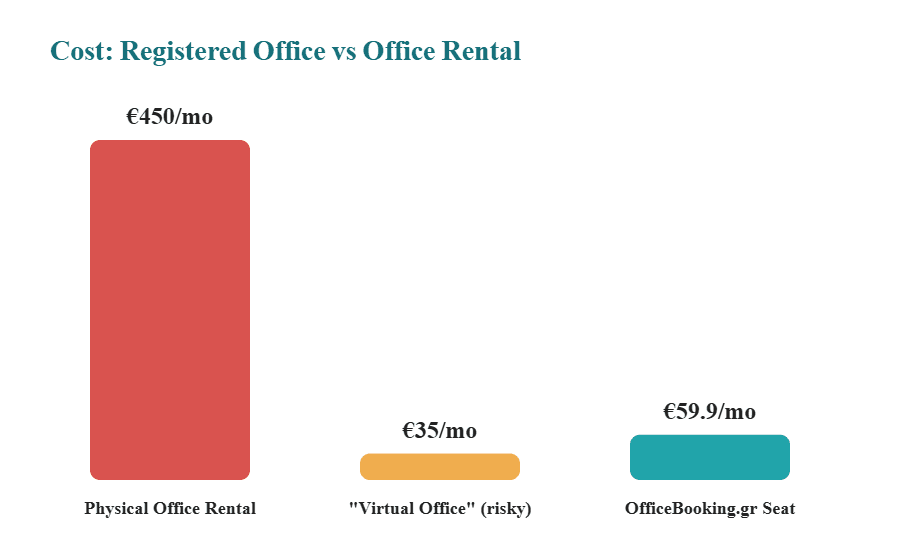
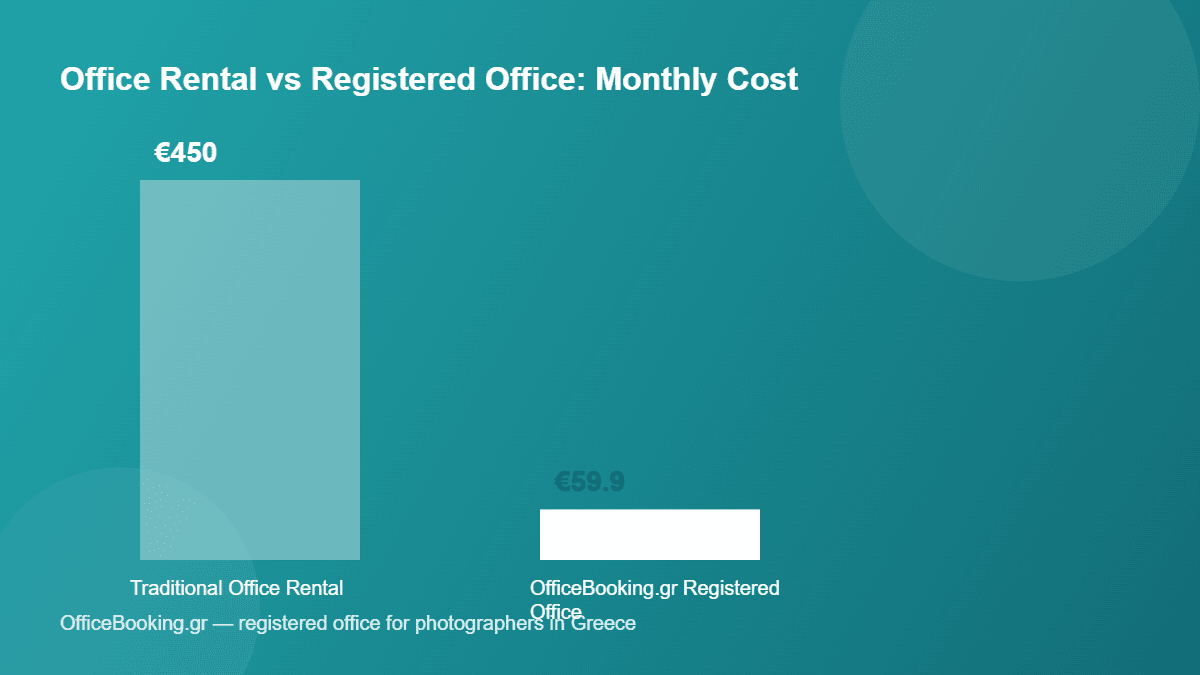
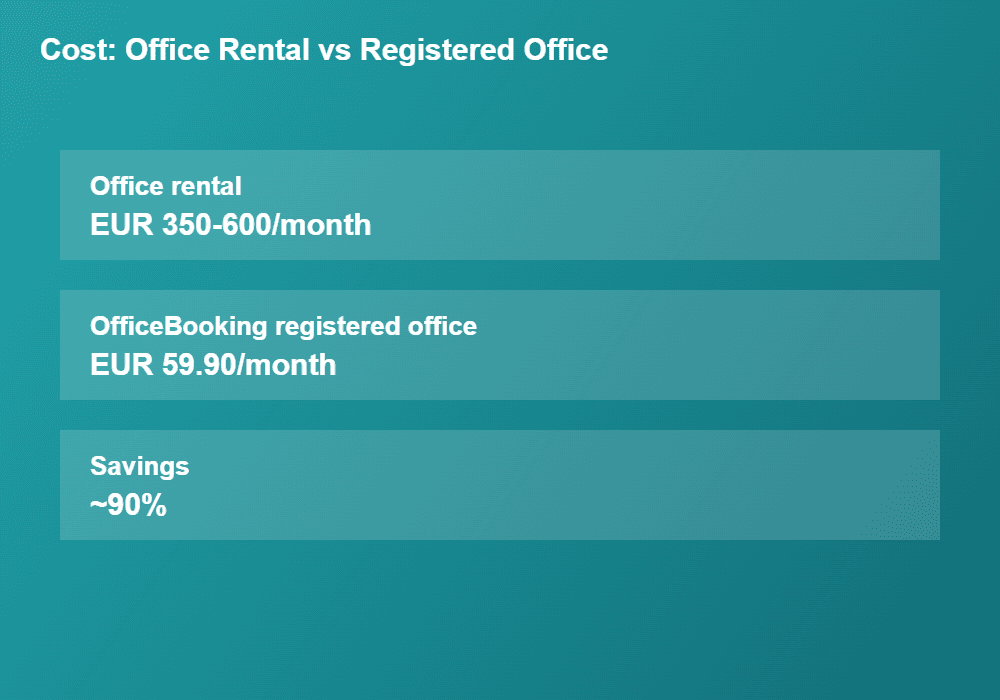
The honest answer: it depends on what “registered office” actually includes. A bare virtual-address subscription can look cheap until you realize it won’t survive an audit. A registered office for an AE company in Greece that includes a real lease, a named locker, mail handling and shared desk access is priced closer to the value it delivers — while still costing roughly a tenth of a traditional office.
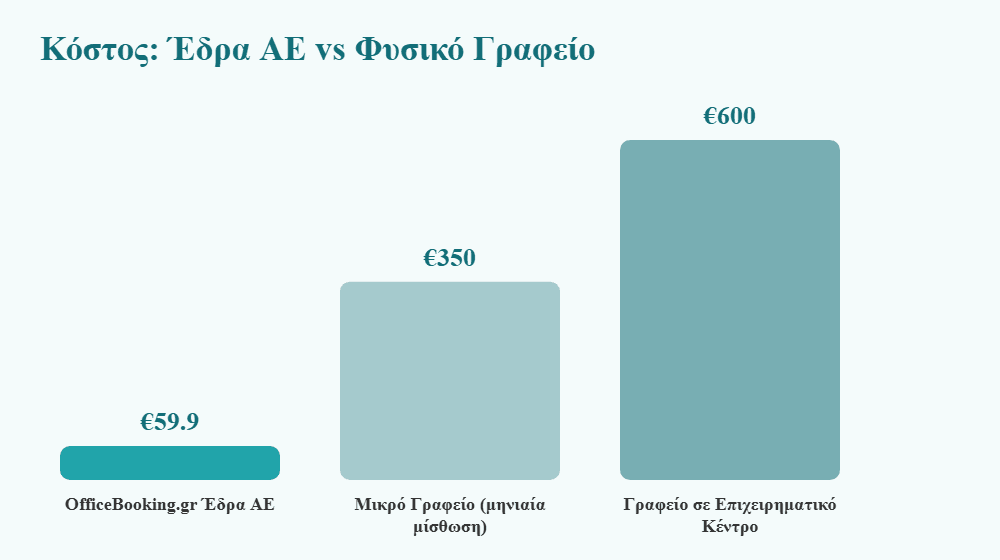
OfficeBooking.gr prices this at €59.90/month (€48.30 + 24% VAT), billed monthly with no long-term lock-in, active in roughly 24 hours after your documents are submitted.
Comparison Table: Cost and Inclusions
| Option | Monthly Cost | Real Physical Address | Taxisnet Lease | Survives DOY Audit |
|---|---|---|---|---|
| OfficeBooking.gr Registered Office | €59.90 | Yes | Yes | Yes |
| Virtual Address Only (no physical space) | €20–40 | No / Limited | Often not | Frequently fails |
| Small Rented Office | €300–450 | Yes | Yes | Yes |
| Business Centre Office | €500–700 | Yes | Yes | Yes |
Audit Readiness and a Possible DOY Inspection
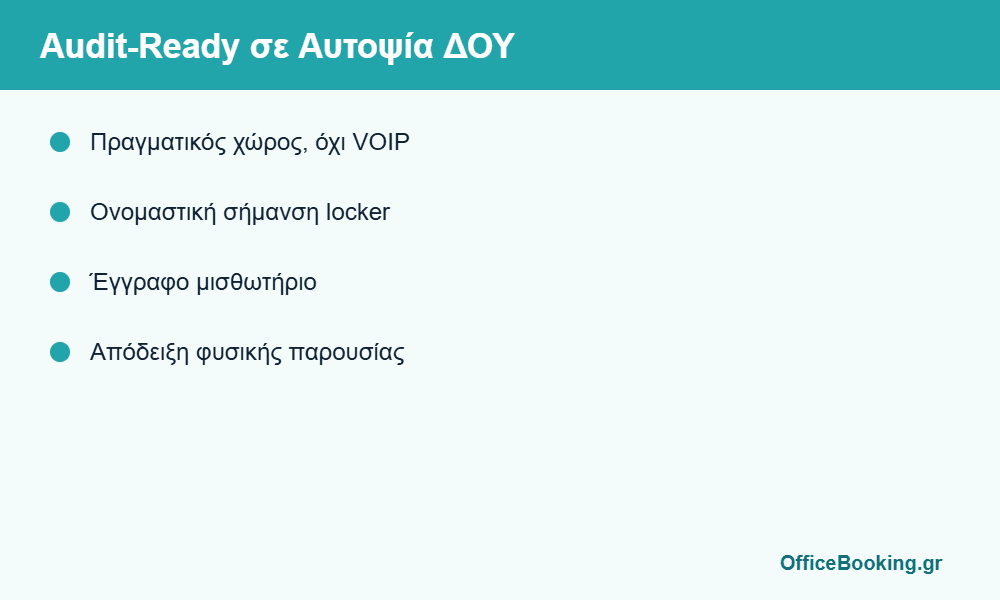
Greek tax authorities can and do carry out on-site inspections (autopsy) to confirm that a declared registered office is real. A purely virtual address with no physical footprint is the single most common reason a registered office fails this check. A registered office for an AE company in Greece needs to hold up when someone actually knocks on the door — which is precisely what a named locker, a real lease and a staffed location are built to do.
Share Capital and the Registered Office
An AE’s minimum share capital requirement is entirely independent of its registered office. Whether your paid-in capital is at the statutory minimum or considerably higher, the registered office obligation is the same: a real, declarable, inspectable address. Questions about share capital thresholds, in-kind contributions or capital structure belong with your accountant or corporate lawyer.
What Company Management Should Check Before Choosing
Before the board signs off on a registered office for an AE company in Greece, it’s worth confirming four things: does the provider issue a genuine Taxisnet-ready lease, is the address a real staffed location (not a forwarding-only box), is mail handled and logged, and is there any physical access included for when a signature or in-person visit is unavoidable.
What This Service Does Not Include
OfficeBooking.gr provides the registered office. For AE incorporation itself, drafting the articles of association, GEMI filings, VAT (FPA) registration, EFKA obligations, share capital certification, or any accounting and legal paperwork, consult your accountant or the appropriate corporate lawyer. For any tax treatment, deduction, or benefit tied to your specific situation: terms and conditions apply — consult your accountant.
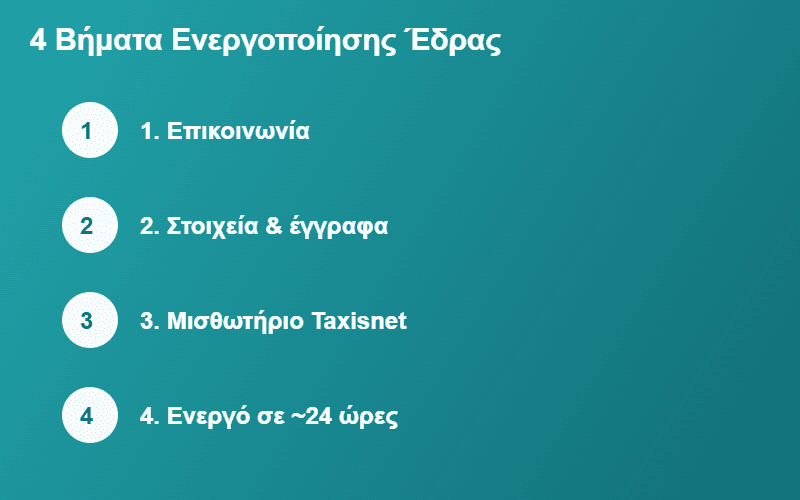
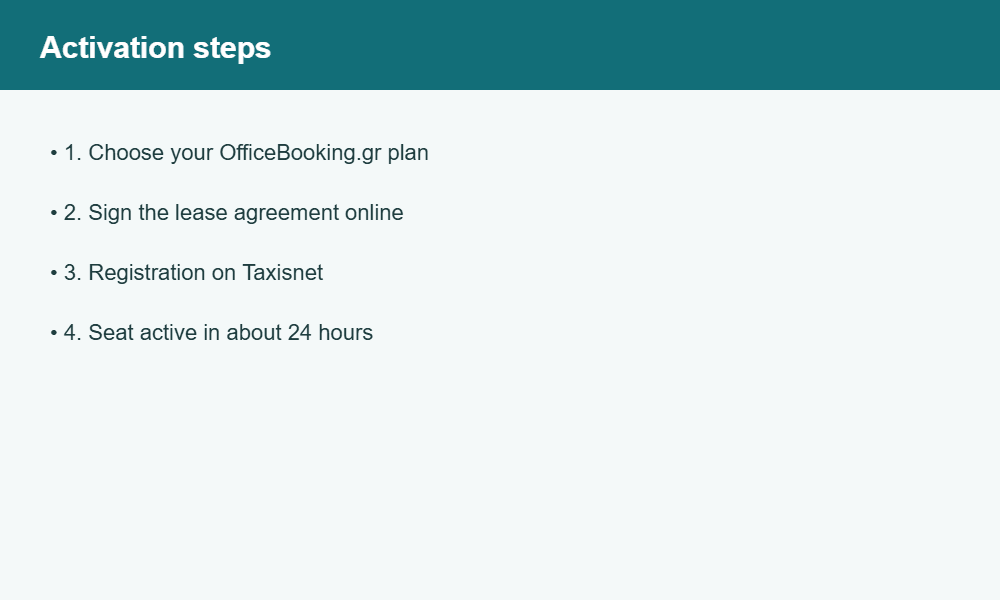
How the Physical Registered Office for Your AE Is Activated
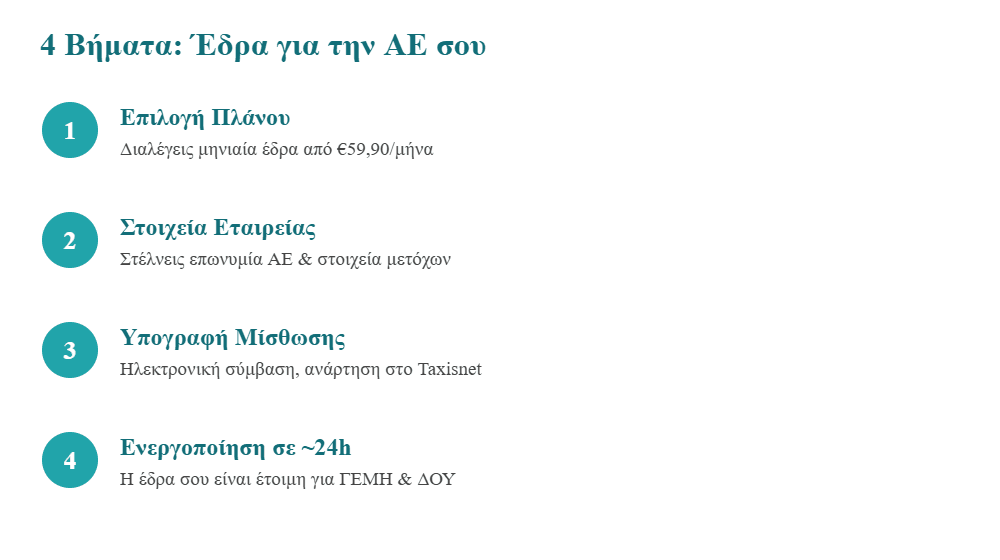
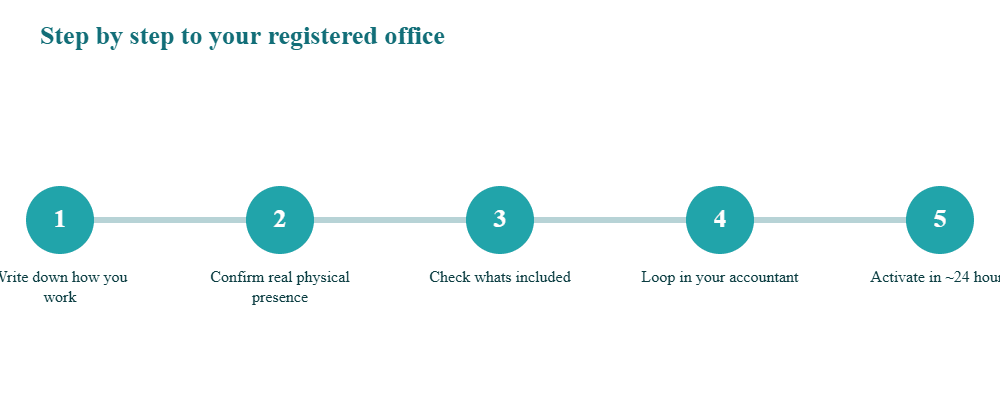
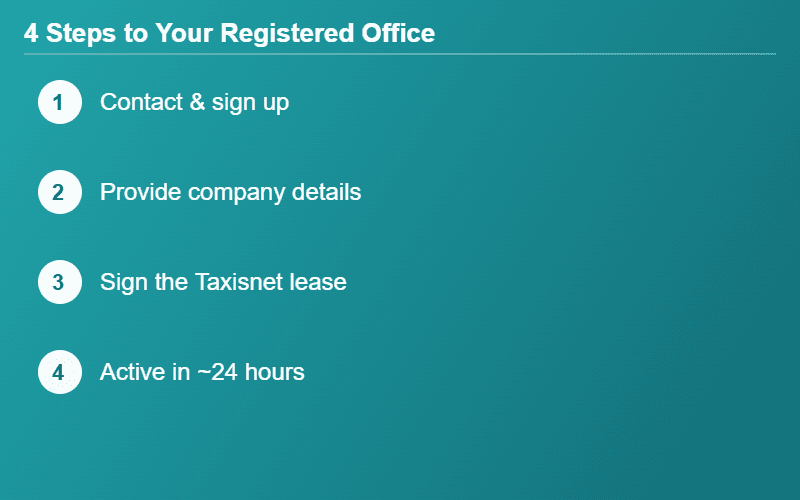
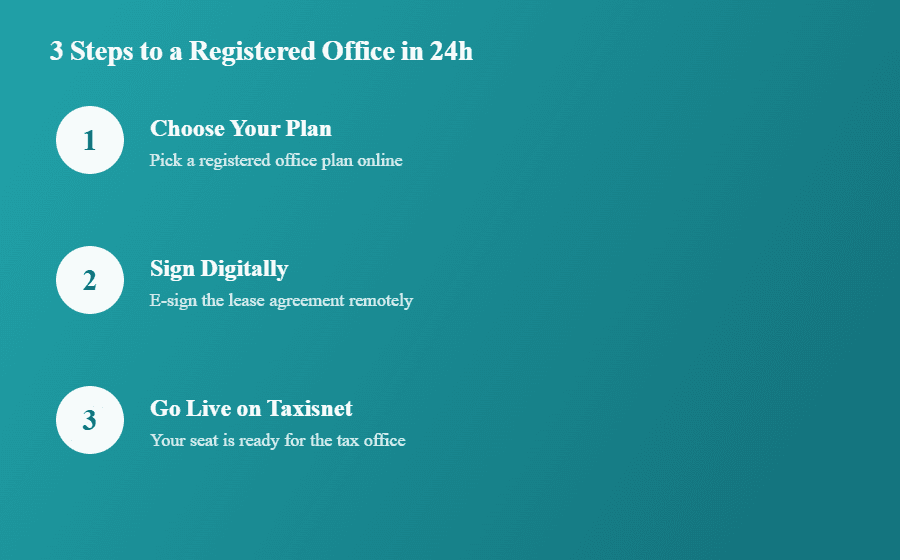
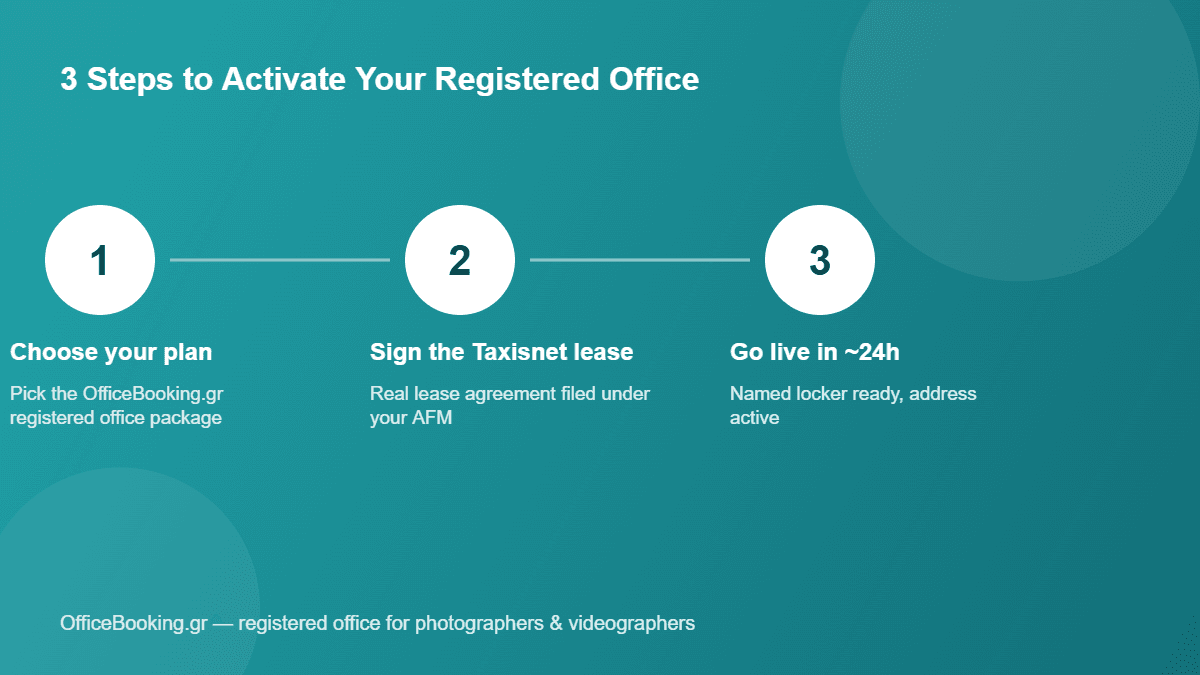
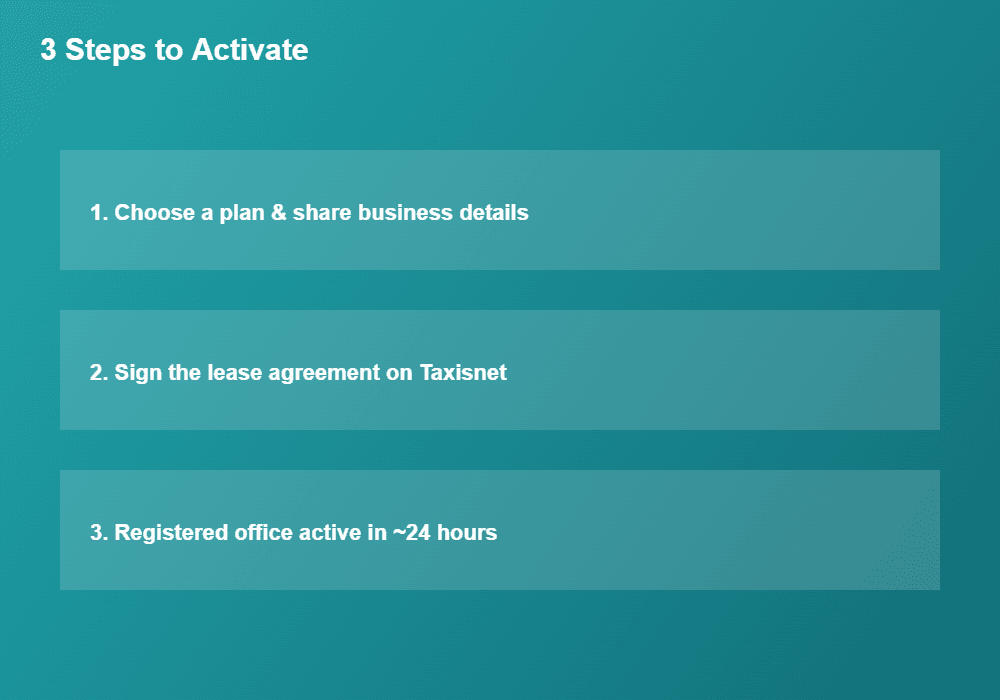
- Choose the plan — the monthly registered office starting at €59.90.
- Send company details — the AE’s legal name and shareholder/board information.
- Sign the lease electronically — the agreement is prepared for upload to Taxisnet.
- Activation in about 24 hours — your registered office is ready for GEMI and DOY.
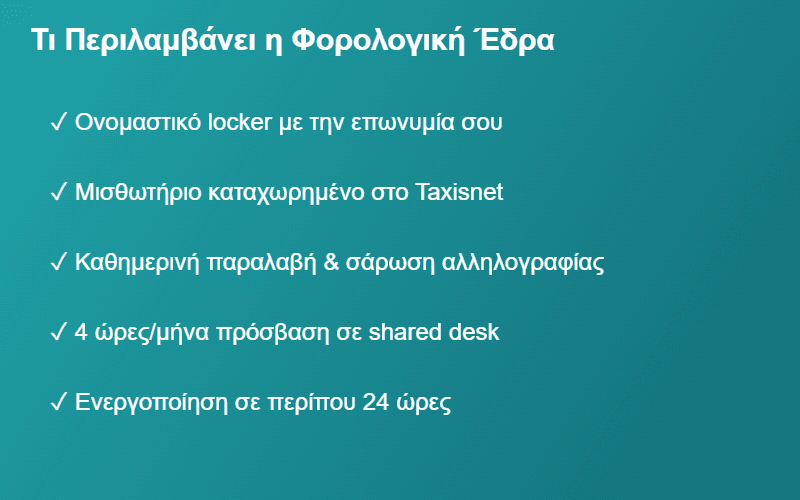
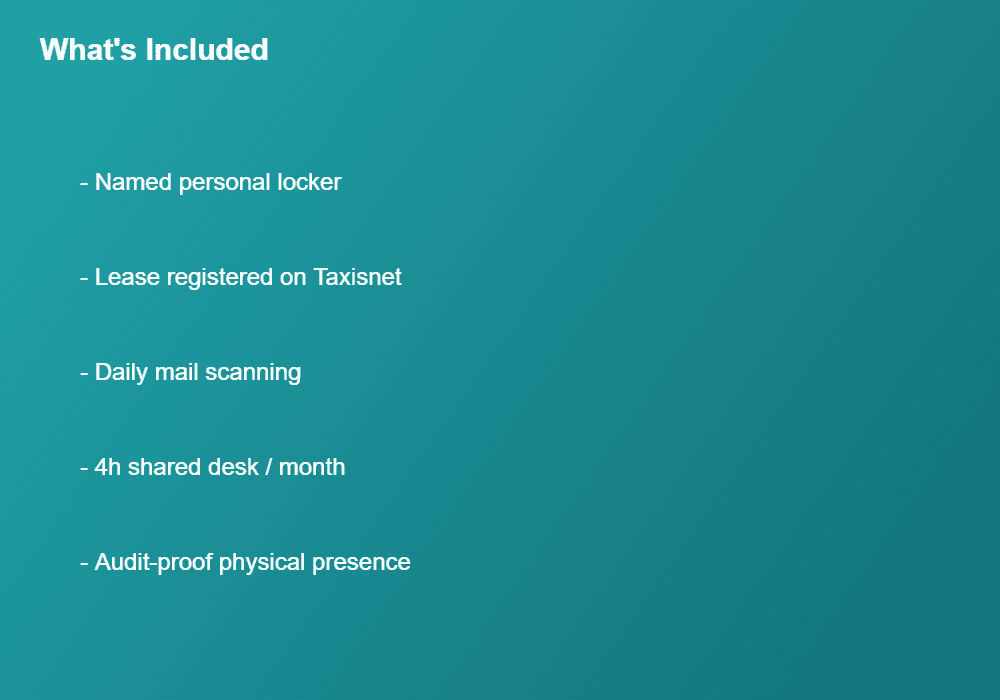
What’s Included at a Glance
Internal Organization After Activation
Once your registered office for an AE company in Greece is live, you can move ahead with GEMI registration, DOY formalities and any remaining formation steps with a clear, verifiable address already in place — rather than scrambling to find one after the rest of the paperwork is already underway.
Frequently Asked Questions About a Registered Office for an AE Company
Do I need to rent a full office for my AE?
No. You can use a genuine registered office without dedicated, full-time office space. OfficeBooking.gr includes 4 hours/month of shared desk access rather than a private, full-time office.
What exactly does OfficeBooking.gr provide?
A real physical registered office at Anaxagora 23, Heraklion, Crete, a lease registered on Taxisnet, a personal named locker under the company’s name, daily mail receipt and logging, 4 hours/month of shared desk access, and activation in roughly 24 hours.
How much does it cost?
€59.90/month (€48.30 + 24% VAT), billed monthly with no long-term commitment. For the tax treatment of this expense, terms and conditions apply — consult your accountant.
Can a virtual-only address survive a DOY audit?
Often not. A registered office with no real physical footprint is one of the most common reasons a declared address fails an on-site tax inspection.
Does the registered office affect my AE’s share capital requirements?
No. Share capital and the registered office are separate obligations. Questions on capital thresholds belong with your accountant or corporate lawyer.
Can I change my AE’s registered office later?
Yes, a registered office can be changed after incorporation, though it requires updating GEMI and DOY records. It’s simpler to start with an address that will hold up long-term.
Is Heraklion, Crete a valid registered office location for a nationwide AE?
Yes. A Greek AE can have its registered office anywhere in Greece regardless of where it actually operates or where its shareholders are based.
Who do I ask about GEMI, VAT or accounting for my AE?
OfficeBooking.gr provides the registered office only. For GEMI, VAT (FPA), EFKA, incorporation documents or accounting, consult your accountant or corporate lawyer.
Foreign Shareholders and Non-Resident Founders
A large share of AE incorporations in Greece today involve at least one foreign shareholder or a board member who does not live in the country. For this group, a registered office for an AE company in Greece solves a specific problem: Greek law requires a real domestic address, but relocating an entire founding team just to satisfy that requirement makes no sense. A compliant registered office lets a foreign-owned AE maintain a genuine Greek presence — mail, a lease, a physical location — without anyone needing to live near it. Immigration status, tax residency and work permits are separate matters entirely, and questions in that area should go to an immigration lawyer or accountant, not to a registered-office provider.
AE vs Other Entity Types: Does the Registered Office Requirement Change?
Whether you incorporate as an AE, an IKE (private capital company) or another Greek legal form, the underlying registered office obligation is the same: a real, declarable address filed with GEMI and recognised by the tax office. What differs between entity types is share capital, governance structure and reporting obligations — not the registered office rule itself. If you are still deciding between an AE and an IKE, that decision should be made with your accountant based on capital, liability and governance needs; either way, you will still need a genuine registered office for an AE company in Greece equivalent, which is exactly what this service provides.
Common Mistakes When Choosing a Registered Office for an AE
The most frequent mistake is treating “registered office” and “virtual address” as interchangeable. A virtual address that only forwards mail, with no real desk, no lease uploaded to Taxisnet and no way to receive an inspector, is the type of address that tends to unravel during a DOY audit. A second common mistake is assuming the cheapest listed price includes everything; many providers advertise a low headline rate and then charge separately for the lease, for mail handling, or for any physical access at all. When evaluating a registered office for an AE company in Greece, the total, all-inclusive monthly cost — not the headline number — is what actually matters.
What Happens If Your Registered Office Fails an Inspection
If a DOY inspection finds that a declared registered office does not correspond to a real, physical, staffed location, the consequences can range from requests to correct the registration to more serious compliance issues affecting the company’s standing. This is precisely why OfficeBooking.gr structures its registered office for an AE company in Greece around a real leased space with a named locker and daily mail handling — the goal is for the address to hold up the first time it’s checked, not to need correcting afterward.
Why Heraklion, Crete Works as a Registered Office Location
A Greek AE’s registered office does not need to be in Athens or Thessaloniki to be valid. Heraklion, Crete is a fully recognised, GEMI-compatible registered office location, and for companies with no specific reason to be based in a mainland business district, it offers the same legal standing at a fraction of the typical business-centre cost. The address at Anaxagora 23 functions exactly as any other registered office would for GEMI filings, tax correspondence, and invoicing.
Registered Office Renewal and Long-Term Stability
Because the registered office for an AE company in Greece is billed monthly rather than as a fixed multi-year lease, it can scale with the company: if the AE grows and eventually needs a full private office, the transition away from the registered-office plan is straightforward, and if the company’s needs stay the same, the monthly plan simply continues without renegotiation. This flexibility is one of the main reasons founders choose a dedicated registered office provider over a traditional lease when the AE does not yet need daily physical space.
Documentation You Receive With Your Registered Office
Beyond the physical address itself, a registered office for an AE company in Greece from OfficeBooking.gr comes with the paperwork trail that GEMI and DOY expect to see: a signed lease agreement in the company’s name, ready for upload to Taxisnet, proof of the address for use in GEMI’s incorporation or amendment filings, and ongoing correspondence records from the daily mail log. Keeping this documentation organised from day one saves time later, whether during a routine filing, a bank account opening, or an audit.
Getting Started
Setting up a registered office for an AE company in Greece with OfficeBooking.gr takes about as long as filling out a short form and signing a lease electronically. There’s no need to visit in person before activation, and the monthly plan can be cancelled without a long-term contract locking you in. If you are mid-way through forming an AE and just need the registered office piece finalised quickly, this is designed to be the fastest part of the whole process.
Is a Heraklion, Crete address suitable if my AE operates elsewhere in Greece?
Yes. A registered office does not need to match your operational location. Many AEs registered at this address run operations in Athens, Thessaloniki or abroad.
Will I receive proof of my registered office for a bank account application?
Yes, the signed lease and address documentation can be used as part of a corporate bank account application, alongside your company’s incorporation documents.
When This Solution Fits
A registered office for an AE company in Greece from OfficeBooking.gr fits founders incorporating an AE without needing daily office space, foreign shareholders who need a compliant Greek address without relocating, and boards that want an audit-ready seat without a traditional lease’s cost or commitment.
Conclusion: A Real Registered Office, Clean Documentation, Clear Cost
A registered office for an AE company in Greece is a small line item with outsized consequences if it’s wrong — a virtual-only address can stall GEMI filings or fail a DOY audit down the line. OfficeBooking.gr’s real physical office at Anaxagora 23, Heraklion, Crete, with a Taxisnet-ready lease, a named locker, daily mail handling and shared desk access, is built specifically to hold up under scrutiny, from €59.90/month, active in about 24 hours.
For official guidance on company registration requirements, see the gov.gr and AADE (Independent Authority for Public Revenue) portals. For GEMI filings, share capital, articles of association or accounting matters specific to your AE, consult your accountant or corporate lawyer.
See our registered office plans · Read more FAQs · Contact us · Back to home